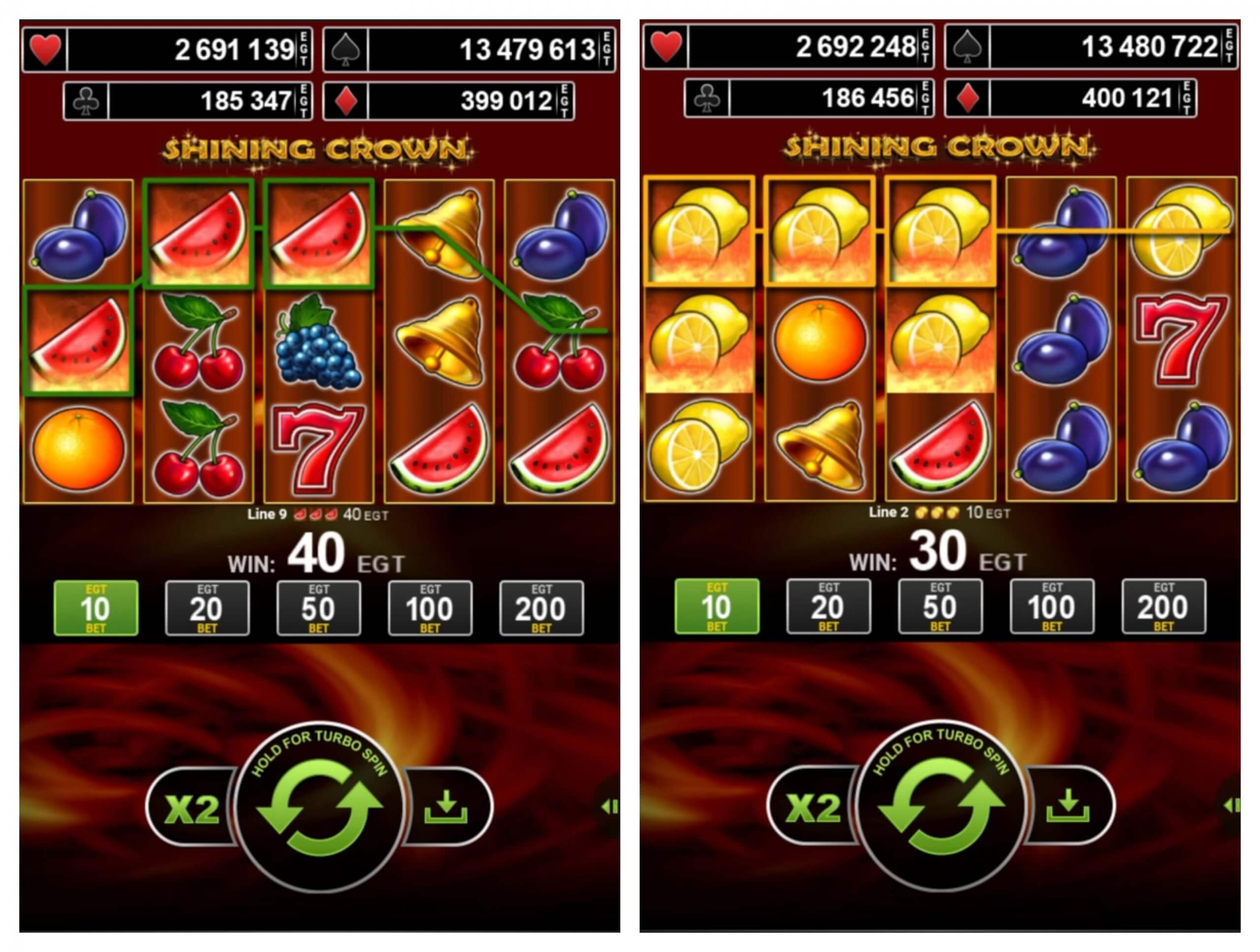
With years of experience analyzing digital entertainment and its mechanics, I believe it is crucial to provide straightforward, accurate educational materials about products like Shining Crown Slot, particularly for younger audiences https://shiningcrownslot.net/. This article is intended as a educational resource, breaking down the ideas supporting such titles without endorsement or encouragement to play. My objective is to empower UK youth with knowledge, helping them comprehend the basic mechanisms, the mathematics of chance, and the compositional principles used, which are frequently concealed by glitzy visuals and sounds. This understanding is a type of digital competence, equipping young persons to reach informed decisions and critically grapple with the content they encounter, recognizing the distinction between recreational activity and possibly hazardous behavior.
Understanding the Basic Concept of a Slot Game
At its core, a slot game like Shining Crown is a software program built around a basic principle: random chance. Traditionally, slot machines were mechanical devices with spinning reels, but today they are sophisticated digital simulations. The game shows a grid, usually of symbols, and the outcome of each ‘spin’ is established by a Random Number Generator (RNG), a computer algorithm that assures each result is independent and unpredictable. The theme, such as a “crown” or royal motif, is simply a narrative skin layered over this mathematical engine. For educational purposes, it’s essential to strip away the thematic glitter and see the mechanism for what it is—a chance-based system where the house, or the game’s mathematical structure, always has a integrated statistical edge over an endless number of plays. This edge, known as the house edge, is basic; it means the game is created for the operator to profit over time, making it a form of entertainment with a foreseeable financial cost, not a feasible income source.
To make this tangible, imagine a straightforward, hypothetical slot with three reels and ten symbols per reel. The total number of possible combinations is 10 x 10 x 10 = 1000. If only one combination pays a jackpot of 800 coins, the probability of hitting it on any spin is 1 in 1000. If a spin costs 1 coin, the game would theoretically return 800 coins for every 1000 wagered, an 80% return. Real games are far more complex, with multiple paylines and symbol weights, but the principle holds: every payout is calibrated within a larger mathematical model intended for a specific long-term return that is always less than 100% of money wagered. This is the unchanging core of the slot machine concept.
Age-Based Legal Boundaries and Why They Exist
In the UK, it is an illegal act for anyone under the age of 18 to gamble, and this includes playing online slots for real money. This legal framework is not a capricious law but a protective measure based on psychological development and hazard analysis. The adolescent brain, particularly the prefrontal cortex responsible for managing impulses and long-term decision-making, is still developing. This makes young people more susceptible to the dopamine-driven feedback loops that games of chance can create. The law recognizes this heightened vulnerability. My role as an educator is to explain the science behind the law, framing it not as a restriction on freedom but as a protection for a developing mind, similar to age limits on alcohol or driving.
The neuroscience is clear: the brain’s reward system evolves earlier than its control systems. The sensation of a win, even a small one, triggers a release of dopamine, reinforcing the behavior. In a developing brain, this reinforcement can be more powerful and lead to deeper behavioral conditioning. Furthermore, young people are typically more in sensation-seeking and may misjudge their own vulnerability. The age limit is a societal line drawn to allow for greater cognitive and emotional maturation before exposure to an activity with known addictive qualities. It’s also a business rule; operators must perform rigorous age verification checks, and failure to do so results in severe fines from the Gambling Commission, emphasizing the seriousness with which this protective boundary is treated.

Understanding Game Symbols and Paytables
Symbols and paytables are the vocabulary of the game. In a theme like Shining Crown, symbols might contain crowns, jewels, crests, and standard card suits. Each symbol has a different assigned value. The paytable is the game’s rulebook—it clearly lists what each symbol combination pays. A key educational exercise is to analyze a sample paytable to grasp volatility. For instance, frequent small wins from low-value symbols versus rare, large wins from a special ‘crown’ symbol. This demonstrates about risk distribution. I often describe that the most common, lower-paying symbols are designed to create a sense of frequent activity, while the high-value ‘jackpot’ symbols are statistically rare, a direct lesson in how reward frequency is inversely related to reward size in chance-based systems.
Let’s construct a simplified analytical example based on common slot structures. A paytable isn’t just a list; it’s a data set indicating the game’s intent. Consider these typical symbol categories:
- Low-Pay Symbols (10, J, Q, K, A): These appear most frequently, providing tiny wins like 2x or 5x your line bet for a combination of five. Their function is to supply constant, small feedback to keep the player engaged.
- Mid-Pay Theme Symbols (Jewel, Sceptre, Castle): Less common, these yield moderate payouts (e.g., 10x to 25x). They create the impression of meaningful progress and interrupt the monotony of low pays.
- High-Pay Premium Symbols (Crown, Royal Character): These are the rarest on the reels. Landing five might return 100x or 500x your bet. Their scarcity is the engine of the game’s volatility.
- Special Function Symbols (Wild, Scatter, Bonus): These don’t usually pay large sums directly but trigger mechanics (like wild substitutions or bonus rounds) that lead to higher win potential, functioning as gateways to more engaging, but still randomly determined, events.
The Science Behind Probability and Player Return Rate (RTP)
This is likely the most vital educational section. Every regulated slot has a published Return to Player (RTP) percentage, such as 96% or 95%. This is a mathematical statistic computed over millions of spins, meaning that for every £100 wagered, £96 might be returned as winnings over an extremely long period. It is not a guarantee for any single session. I use this to demonstrate the law of large numbers versus individual experience. A player might win big in ten spins or lose everything; the RTP merely manifests in the aggregate. This disconnect between long-term mathematical expectation and short-term emotional experience is a fundamental concept. Analyzing RTP and probability models helps youth build numerical literacy and a sound skepticism towards claims of “beating the odds.”
To enhance this, we must discuss volatility (or variance). A game with 96% RTP may behave wildly differently. A low-volatility slot returns frequent, small wins, nearly tracking the RTP over shorter sessions, promoting longer playtime. A high-volatility slot such as many themed “jackpot” games has infrequent but larger wins, producing huge short-term swings. You may lose 200 consecutive spins before a win that regains most losses. The RTP is the same, but the player experience is fundamentally different. This is vital for understanding emotional risk: a high-volatility game can create intense frustration followed by euphoric relief, a strong psychological cocktail. The mathematics also reveals that chasing losses is a logical fallacy; each spin is independent, so the “missing” £4 of the RTP is not a debt to be reclaimed but a spread cost absorbed across all players over time.
The Role of Random Number Generators (RNGs)
The Random Number Generator is the central component of any online slot, such as games like Shining Crown. I intend to explain this: an RNG is not a physical wheel or dice; it’s a piece of code continuously generating thousands of number sequences per second, even when no one is playing. When you hit ‘spin’, the game merely uses the number produced at that exact moment and translates it via a fixed paytable into a particular arrangement of symbols on the screen. This means every spin is a discrete, isolated event. There is no history, no ‘due’ win, and no pattern. Educating youth about RNGs debunks popular misconceptions about ‘hot’ or ‘cold’ machines and emphasizes that outcomes are solely based on chance, a critical lesson in odds and digital perception versus perception.
It’s equally crucial to understand that these RNGs are verified by third-party testing agencies to guarantee impartiality and genuine unpredictability. However, this verification guarantees the absence of tampering, not advantageous probabilities for the player. The RNG populates a virtual reel strip, where each symbol occupies a certain number of “stops”. A valuable graphic like a crown may occupy just 2 slots on a digital reel with 200 stops, while a cheap cherry icon might occupy 30. The RNG selects a stop number for each drum, and the symbol at that position is shown. This mapping from a chance value to a biased icon is how the game’s designed volatility and RTP are achieved, proving the spin’s visual outcome is predetermined by intricate, hidden calculations when you click to play.
Exploring Bonus Features and Their Mechanics
Bonus features including free spins, pick-me games, or expanding wilds are engagement hooks crafted to add excitement. In an educational context, we must analyze their function, not just their fun. These features disrupt the base game with a mini-game or altered rules, often providing a higher potential win. However, they are not gifts; they are triggered with the same RNG logic, complying with the game’s overall return percentage. For example, a “Free Spins Round” might be activated by landing three scatter symbols. This teaches conditional probability—the chance of the bonus is the chance of landing those specific symbols. Understanding that these features are pre-programmed events within the mathematical model is essential to seeing the entire game as a unified system of chance, not a series of magical bonuses.
Take the common “pick bonus” where you select from hidden objects to reveal instant prizes. This feels like a game of skill, but the total prize pool for that round is determined the moment the bonus is triggered. Your choices merely reveal a pre-assigned outcome. Similarly, “free spins with multipliers” might promise bigger wins, but the average return from that round is still factored into the game’s overall RTP. A game with a 96% RTP doesn’t have a base game of 94% and a bonus of 110%; rather, the exhilarating bonus round average is mathematically blended with the lower-paying base game to hit that 96% target. These features are excellent at creating memorable peak experiences—what psychologists call “peak-end rule”—making you remember the thrilling bonus rather than the many uneventful spins, a powerful cognitive bias in game design.
Sound Engineering and Visual Perception in Slot Games
The instructional value here lies in media literacy. The visuals and audio in games like Shining Crown are not accidental; they are carefully crafted psychological tools. Celebratory jingles for wins, even small ones, use encouragement. Anticipatory sounds during a spin create suspense. Flashing lights and moving visuals near-misses (where symbols almost line up) deceive perception into sensing a ‘close call,’ promoting continued play. Visually, the royal theme uses links of wealth, luxury, and success. By deconstructing these audiovisual elements, we teach young people about persuasive design and how sensory feedback can affect emotional response and decision-making, a skill relevant to analyzing advertising, social media, and other digital interfaces.
Examine the specific techniques: “Losses disguised as wins” (LDWs) happen when you win back less than your original bet, but the game still produces celebratory sounds and animations. This generates a false positive. The use of “spin to win” mechanics, where reels pause in sequence to increase drama, is a direct borrowing from film editing techniques. The color palette—golds, deep purples, bright gems—is linked to opulence. Even the game’s title, “Shining Crown,” leverages aspirational symbolism. These elements operate at a subconscious level to create a world where the player feels momentarily powerful and wealthy, a stark contrast to the underlying mathematical reality. Deconstructing this sensory layer-by-layer uncovers how modern digital slots are as much a product of psychological and artistic design as they are of mathematical programming.
Responsible Gaming Principles for Young Adults
As young adults near the age of majority, education must move to principles of self-control. This isn’t about how to play, but how to position any potential future engagement with extreme prudence. Key tenets include recognizing that gaming is not a way to earn income, but a type of amusement with a cost. I recommend for establishing firm limits on time and spending used before any play starts and viewing setbacks as the cost of that entertainment, not a debt to be pursued. Critically, it includes spotting personal warning signs, such as thinking about gambling constantly, trying to recover deficits, or borrowing money. This instruction promotes a outlook of conscious participation and self-knowledge, crucial for handling many mature settings.
Real-world implementation of these principles involves tangible habits. To begin, the money utilized should be disposable leisure resources, never cash for necessities like accommodation, expenses, or travel. A advance strategy is essential: determine “I will allocate £20 for one period of amusement this evening,” and cease when either threshold is hit, no matter of wins or deficits. It’s also advisable to combine gambling pastimes with other social activities to prevent it from turning into a main hobby. Comprehending the “gambler’s fallacy” and the randomness of chance events helps psychologically separate from consecutive losses. In conclusion, regular self-assessments are crucial: Are you gambling for fun, or to avoid pressure? Are you keeping secret your actions? Answering yes to such inquiries is a strong indicator to pause and obtain objective data or help.
Where to Discover Help and Additional Objective Resources
Awareness also means understanding where to go for objective help or information. I always offer a roster of trustworthy, non-commercial organizations devoted to education and support. These resources are vital for all, including young people, who may have concerns for themselves. They provide tools, advice, and a viewpoint wholly free from industry influence. Engaging with these resources should be regarded as a sign of strength and proactive self-management, not a last resort. They deliver the factual grounding and nurturing frameworks that balance the persuasive design of gambling products, enabling individuals with context and community.
In addition to the frontline charities, I encourage interested minds to examine the raw data and academic perspectives. The UK Gambling Commission’s public data sets disclose participation trends and problem gambling prevalence rates, offering a serious macro-view. Academic journals release studies on all aspects from the exact algorithmic structures of games to the neuroimaging of decision-making in problem gamblers. For a even more approachable deep dive, the websites of these organizations often feature blogs, podcasts, and video explainers that convert complex research into digestible insights. This ecosystem of objective resources is designed to demystify the industry and support informed citizenship, ensuring that any knowledge of games like Shining Crown is grounded in evidence, not just experience or marketing.